Influencer marketing in the US has moved past the experimental stage. Brands now treat creator partnerships as a core growth channel alongside paid social and email, and TikTok Shop and Instagram Shop have turned creator content into a direct storefront rather than just a brand-awareness play.
That shift has exposed the limits of running a program manually. Spreadsheets, inbox outreach, and hand-built monthly reports can't keep pace with campaigns running across Instagram, TikTok, and YouTube at once. This is why dedicated influencer marketing software has become standard, and why AI, for discovery, outreach, and reporting, is now the deciding factor between platforms.
This guide compares the best influencer marketing platforms for USA brands to help you choose based on business size, budget, and workflow.
What Is an Influencer Marketing Platform?
Software that helps brands find creators, manage relationships, run campaigns, and measure results, all in one system instead of spreadsheets and email. Core capabilities typically include:
- Discovery — searching creators by niche, audience demographics, and engagement rate.
- Influencer CRM — relationship history, rates, and past collaborations in one place.
- Campaign management — briefs, approvals, and deliverables in one dashboard.
- Outreach — personalized messaging at scale instead of one by one.
- Payments — flat fee, product, or commission-based compensation.
- Analytics — reach, engagement, and sales tied back to specific creators.
Some platforms specialize in discovery alone; end-to-end platforms cover the full workflow from search to payout.
Why USA Brands Need Influencer Marketing Software in 2026
- The creator economy is professionalizing. Creators expect fast responses and clear rate cards; a messy DM-based process loses good ones to better-organized brands.
- Social commerce closed the content-to-checkout gap. TikTok Shop and Instagram Shop make attribution, knowing exactly which creator drove a sale, essential.
- AI changed what "efficient" means. Filtering profiles, writing outreach, and compiling reports by hand used to take a full team; AI now handles the first pass on all three.
- ROI expectations have risen. Leadership wants influencer spend tied to real numbers via GA4, Shopify, or Meta Ads data, not just impressions.
- Campaign volume is scaling. Brands running seasonal launches and always-on affiliate programs at once need a system that handles several campaigns in parallel.
How We Evaluated These Platforms
Each platform was assessed on: creator database size and filter depth, AI capabilities, campaign workflow (barter, paid, affiliate support), influencer CRM, outreach automation, real-time reporting, ecommerce and analytics integrations, ease of use, support quality, and pricing transparency.
List of Top 10 Influencer Marketing Platforms for USA Brands
1. MyWall
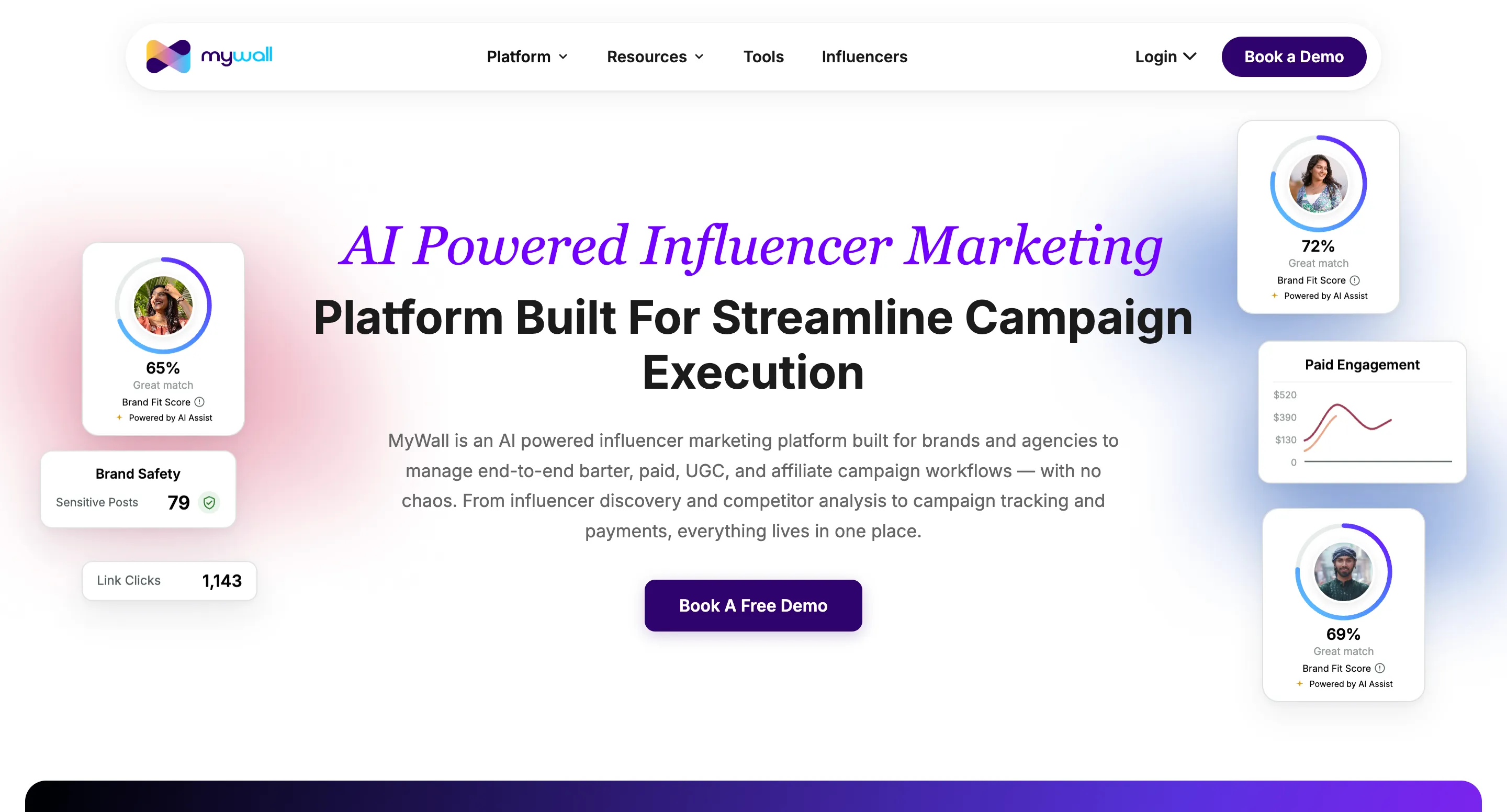
Overview: MyWall is an AI-powered influencer marketing platform and an influencer marketplace built for both brands and creators, offering influencer discovery, outreach, campaign management, and ROI tracking in a single unified workspace. Rather than treating AI as a bolt-on search filter, MyWall builds it into the core workflow, from shortlisting creators to running outreach in the background.
Best for: Growing US ecommerce and DTC brands that want an end-to-end, AI-powered workflow without enterprise-level pricing or onboarding time.
Key features: MyWall's Influencer Discovery Tool searches a 150M+ creator network using 30+ filters, including niche, engagement rate, views, and a visual content score, so brands shortlist creators who genuinely fit the product rather than just hitting a follower target. Competitor intelligence shows which creators rival brands already work with. MyWall Genie, the platform's built-in AI assistant, handles shortlisting, drafting outreach, and summarizing campaign performance, while Auto DM removes the manual work of first contact.
With in the MyWall influencer marketplace, vetted creators apply directly to campaigns with rates and past work attached. Unlike platforms that focus on only one campaign model, MyWall enables brands to launch and manage Paid, Barter, Affiliate, and UGC campaigns from one unified platform and a single dashboard. Whether you're running product seeding, paid creator partnerships, affiliate collaborations, or user-generated content campaigns, every workflow—from creator applications and negotiations to approvals, payments, and performance tracking—is managed in one place without switching between multiple tools..
Pricing: Custom plans based on program size; contact MyWall for a quote.
Why choose it: For a US brand that wants one platform covering the entire creator workflow, discovery, outreach, campaign management, and ROI, backed by an active influencer marketplace of vetted creators, MyWall offers that depth at a scale and price point that fits growing brands, not just enterprise budgets.
2. Upfluence
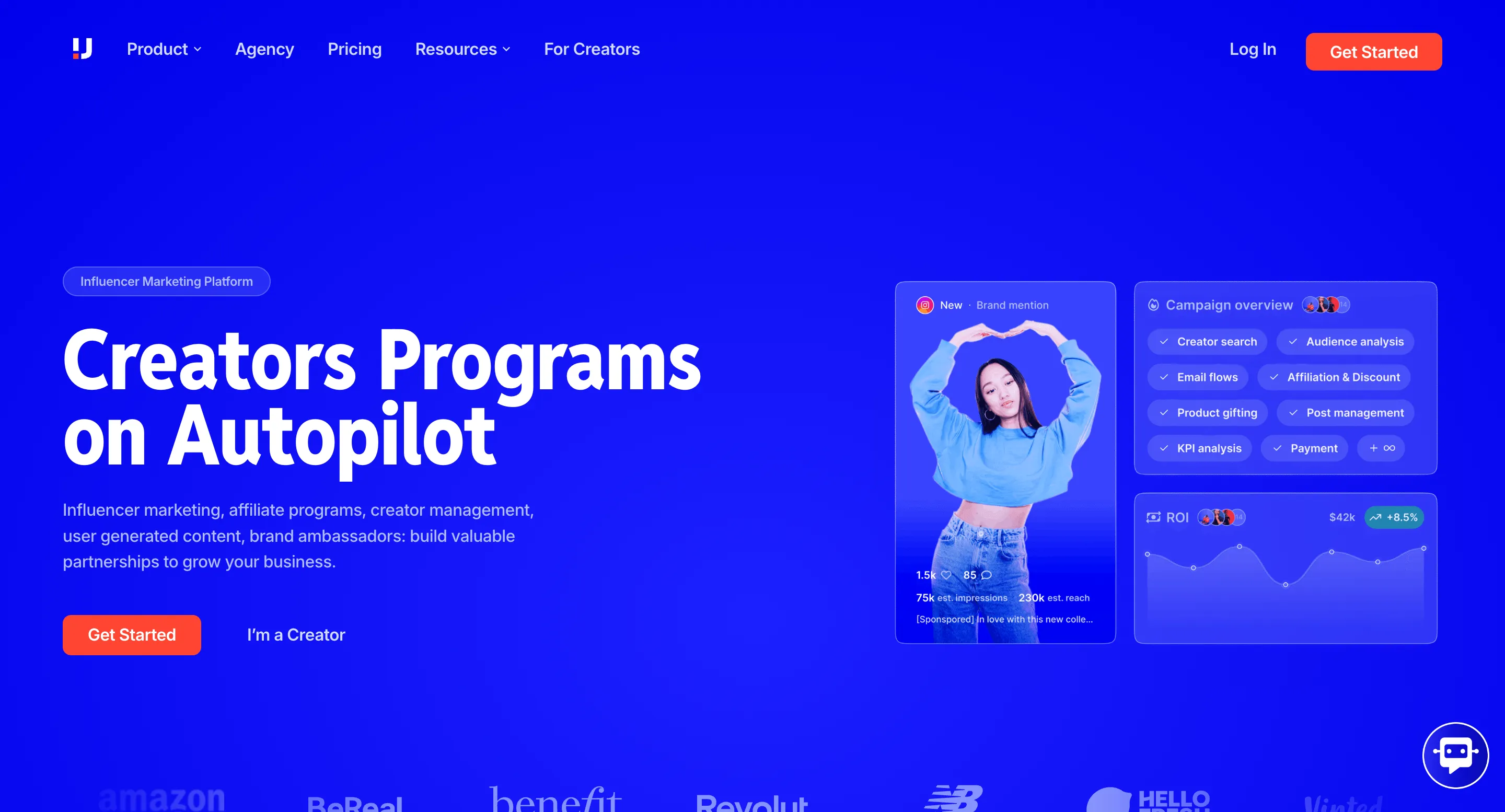
Overview: Upfluence is a cloud-based influencer and affiliate marketing platform built around a database of creator profiles and deep ecommerce integrations. Its standout feature is Live Capture, which analyzes the social reach of a brand's own website visitors and customers to surface creators who are already buying the product.
Best for: DTC and ecommerce brands, especially on Shopify, that want to turn existing customers into affiliates and influencers.
Key features: Creator discovery and search, native Shopify, WooCommerce, and Klaviyo integrations, affiliate link and coupon code tracking, campaign management, and creator payments.
Pricing: Custom, generally reported in the $478 to $3,000+ per month range depending on plan and contract length.
Why choose it: If a brand's biggest opportunity is inside its own customer list rather than cold outreach to strangers, Upfluence's customer-to-creator model is a genuine differentiator.
3. CreatorIQ
Overview: CreatorIQ is an enterprise influencer marketing platform built for large, ongoing creator programs. It's the platform of choice for major global brands, offering deep analytics, compliance workflows, and API-level integrations with existing martech stacks.
Best for: Enterprise brands and agencies managing hundreds or thousands of creator relationships with dedicated internal teams.
Key features: AI-powered creator discovery across a large indexed database, fraud analysis, white-label agency tools, earned media value (EMV) tracking, workflow management, and API integrations into systems like Salesforce.
Pricing: Custom enterprise pricing, with published estimates starting around $30,000 per year and annual contracts required.
Why choose it: For a large enterprise brand with a seven-figure creator budget and a dedicated team, CreatorIQ's depth and compliance tooling justify the investment.
4. GRIN
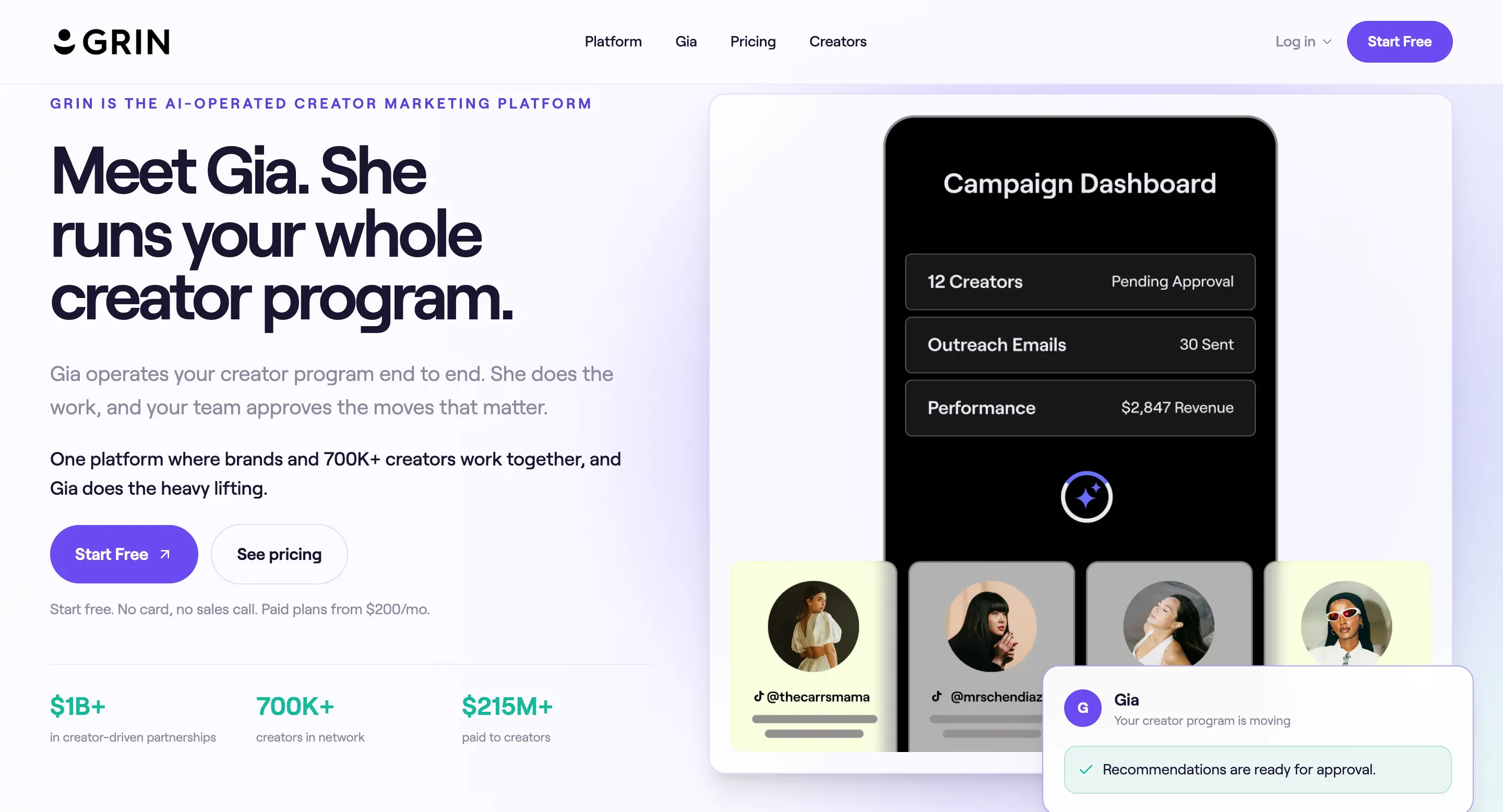
Overview: GRIN is an all-in-one creator management platform built specifically for ecommerce. It centralizes discovery, relationship management, product seeding, and revenue reporting, with a particular focus on tying influencer activity directly to sales.
Best for: Established ecommerce and DTC brands, especially in fashion, beauty, and tech, running always-on influencer programs at scale.
Key features: Large creator database, integrated email inbox, affiliate link and discount code generation, product seeding and content management, real-time ROI reporting, and ecommerce integrations.
Pricing: Reportedly starts around $25,000 per year (roughly $2,000+ per month) on an annual contract.
Why choose it: For an established DTC brand that has outgrown lighter tools and wants influencer activity tied tightly to revenue, GRIN's ecommerce-first depth is a strong fit.
5. Modash
Overview: Modash is a discovery-focused influencer marketing platform built for in-house ecommerce teams, particularly Shopify brands. It pairs a very large creator database with detailed filters and audience analysis, and layers in outreach, gifting, and payments.
Best for: Budget-conscious Shopify brands and small teams that need strong discovery without enterprise pricing.
Key features: A large creator database with deep filters (niche, location, engagement, fake follower scores), verified creator email outreach, product gifting and affiliate tracking, and campaign performance reporting.
Pricing: Publicly listed tiers starting around $199 to $499 per month on annual billing, with custom enterprise pricing above that.
Why choose it: For a Shopify brand that wants strong creator discovery and transparent pricing without negotiating an enterprise contract, Modash is one of the better value options in the category.
6. Later (Later Influence)
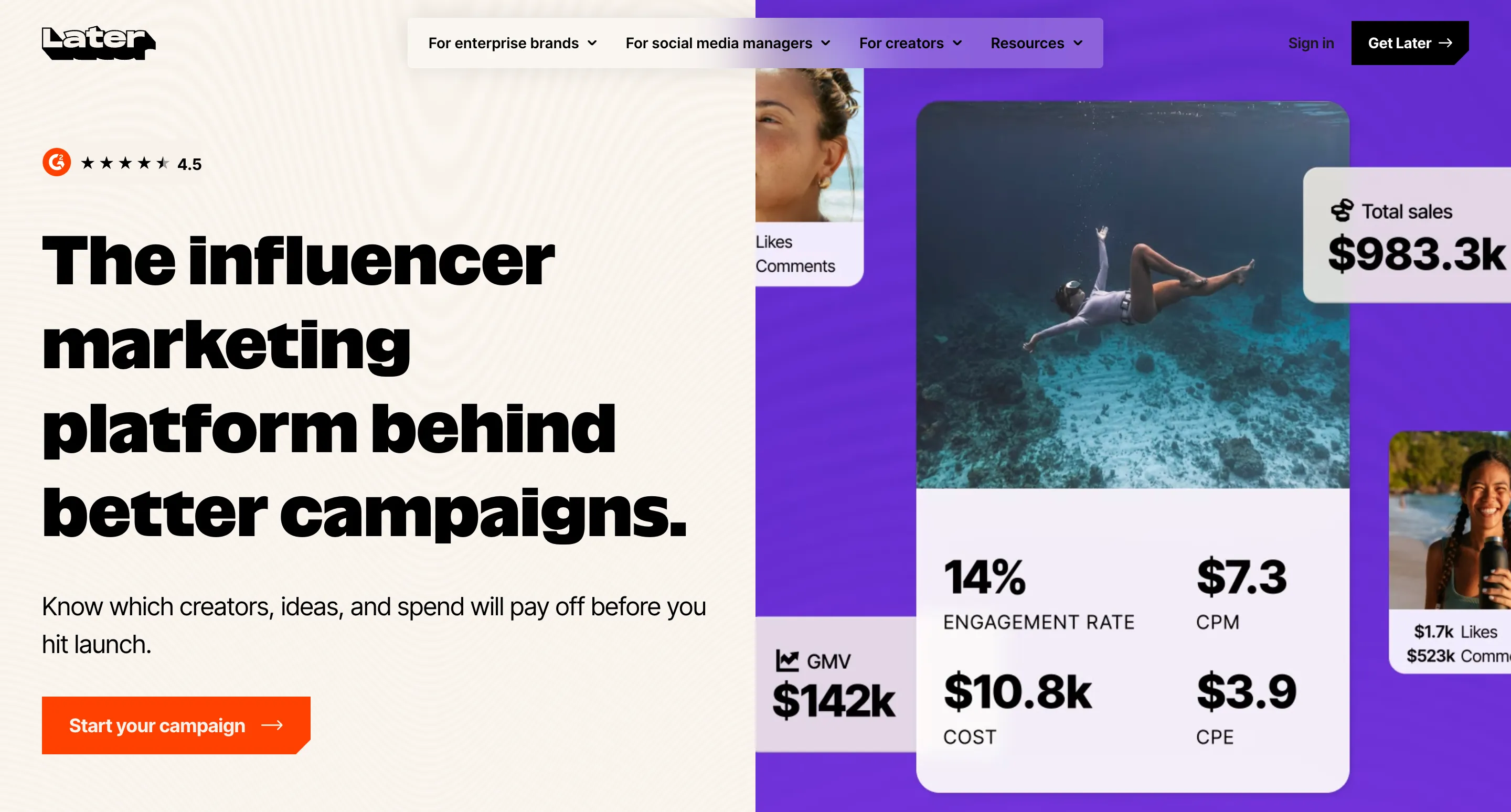
Overview: Later Influence, formerly known as Mavrck, is an influencer marketing platform that emphasizes finding micro-influencers from a brand's existing customer base and running data-informed campaigns through an AI-driven engine.
Best for: Brands that want influencer discovery blended with their existing social media management workflow, since Later also owns a widely used social scheduling tool.
Key features: A sizable influencer database, AI-powered discovery, automated campaign workflows, affiliate link tracking, and real-time analytics with EMV and ROI predictions.
Pricing: Custom, quote-based, with three plan tiers differentiated by features and support level.
Why choose it: For a brand that wants influencer marketing integrated with its broader social media management stack, Later Influence's combined offering is a practical fit.
7. Influencity
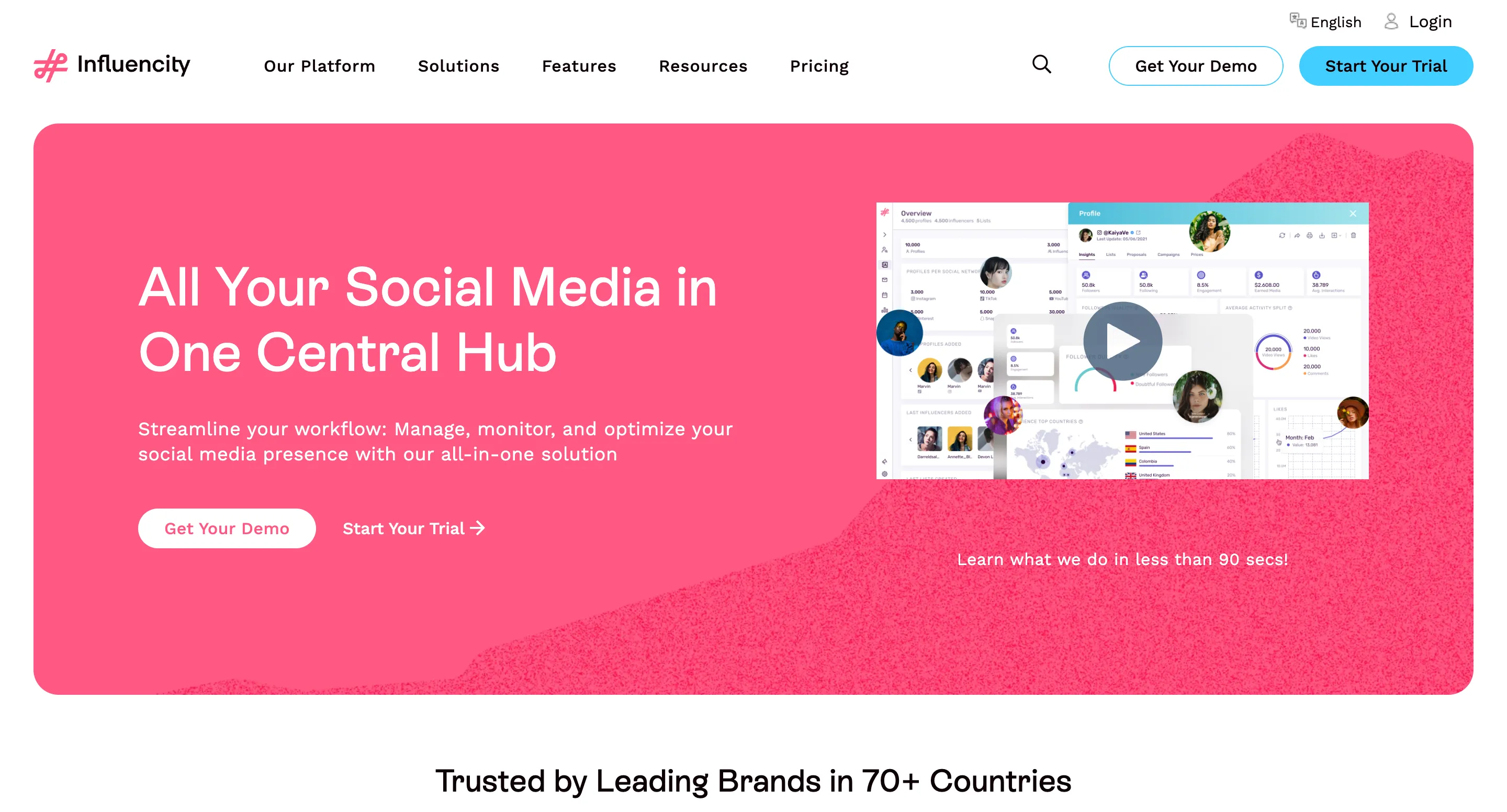
Overview: Influencity is a discovery and analytics-heavy influencer marketing platform based in Spain, built around a large creator database and detailed profile analysis for brands and agencies.
Best for: Agencies and brands that prioritize deep discovery and analytics over full campaign operations.
Key features: A large creator database across Instagram, TikTok, and YouTube, cost predictions, fake influencer detection, engagement analysis, and real-time performance reporting.
Pricing: Tiered plans starting around $198 to $398 per month, with higher business and enterprise tiers above that.
Why choose it: For a team that leans heavily on data-driven creator vetting before committing to outreach, Influencity's analytics depth stands out.
8. Collabstr
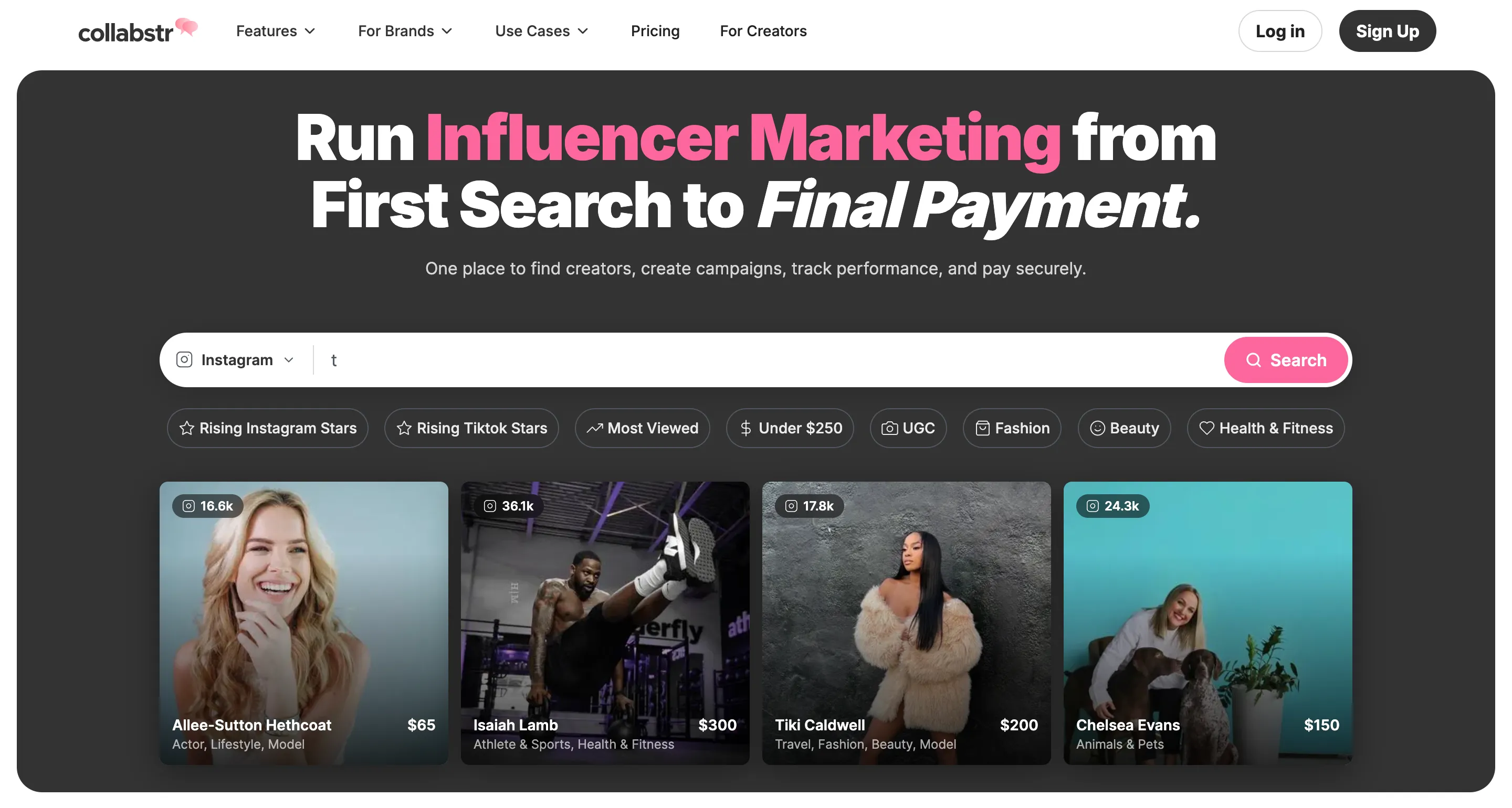
Overview: Collabstr is a self-serve creator marketplace where brands browse, hire, and pay influencers and UGC creators directly, without cold outreach or long-term software contracts.
Best for: Small to mid-size ecommerce brands that want to hire creators quickly without a full campaign management platform.
Key features: A searchable marketplace of vetted creators, transparent upfront pricing per creator, escrow-protected payments, and audience reports to verify follower quality.
Pricing: Free to browse; paid plans reported from around $299 to $399 per month, plus a per-transaction marketplace fee.
Why choose it: For a brand that mainly needs UGC and straightforward influencer bookings without building out a full campaign workflow, Collabstr removes a lot of the friction.
9. Afluencer
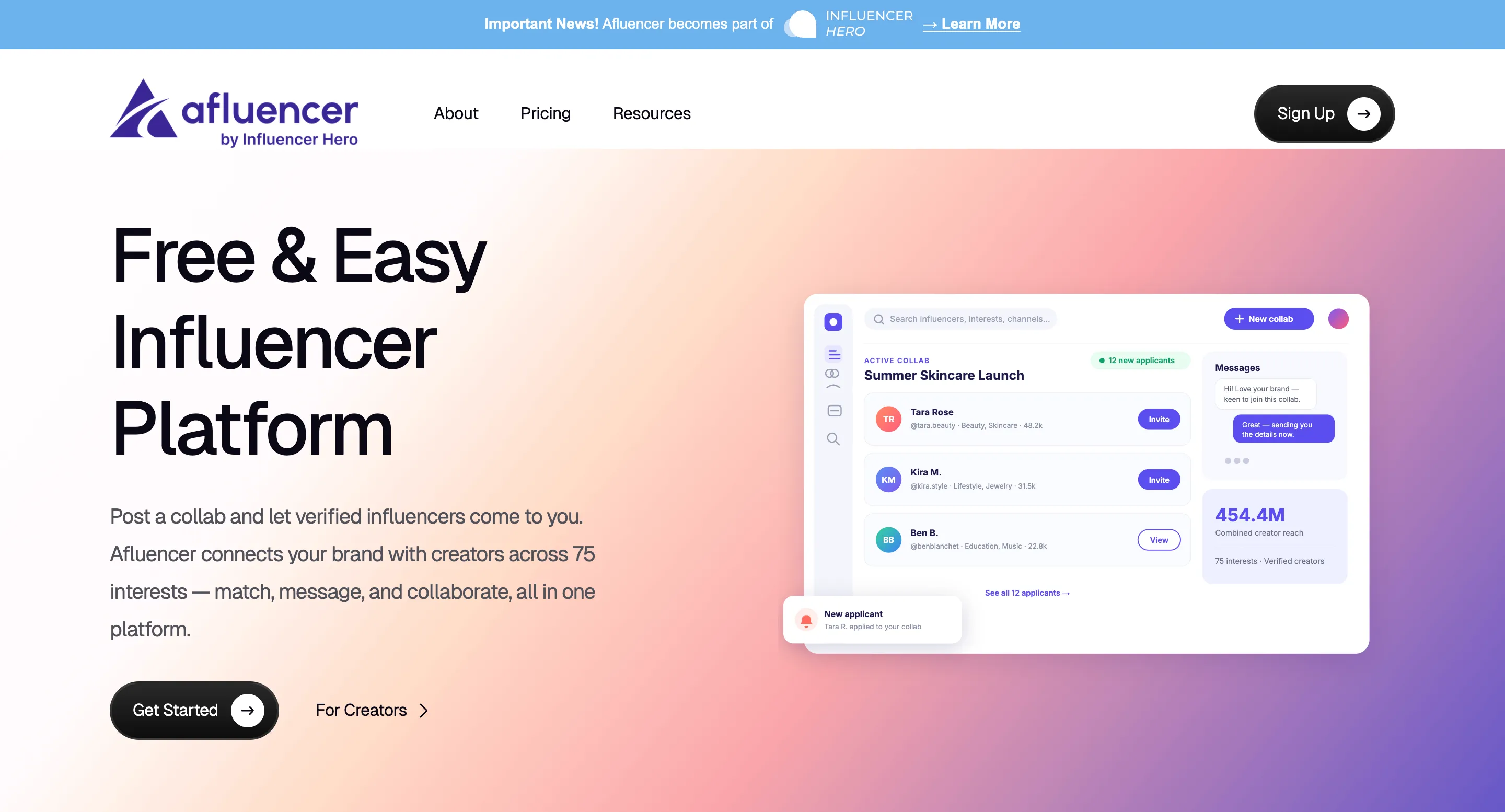
Overview: Afluencer is a marketplace-style platform where brands post collaboration opportunities and creators apply, flipping the typical outreach model. It focuses heavily on micro and nano influencers.
Best for: Brands seeking direct collaboration with micro and nano creators without agency fees or heavy outreach.
Key features: Campaign listings that creators apply to directly, a focus on smaller, higher-engagement creator accounts, and a freemium pricing model.
Pricing: Free plan with limited searches; paid plans reported starting around $49 per month.
Why choose it: For a smaller brand focused specifically on micro-influencer partnerships, Afluencer's application-based model is a low-friction way to start.
10. Skeepers
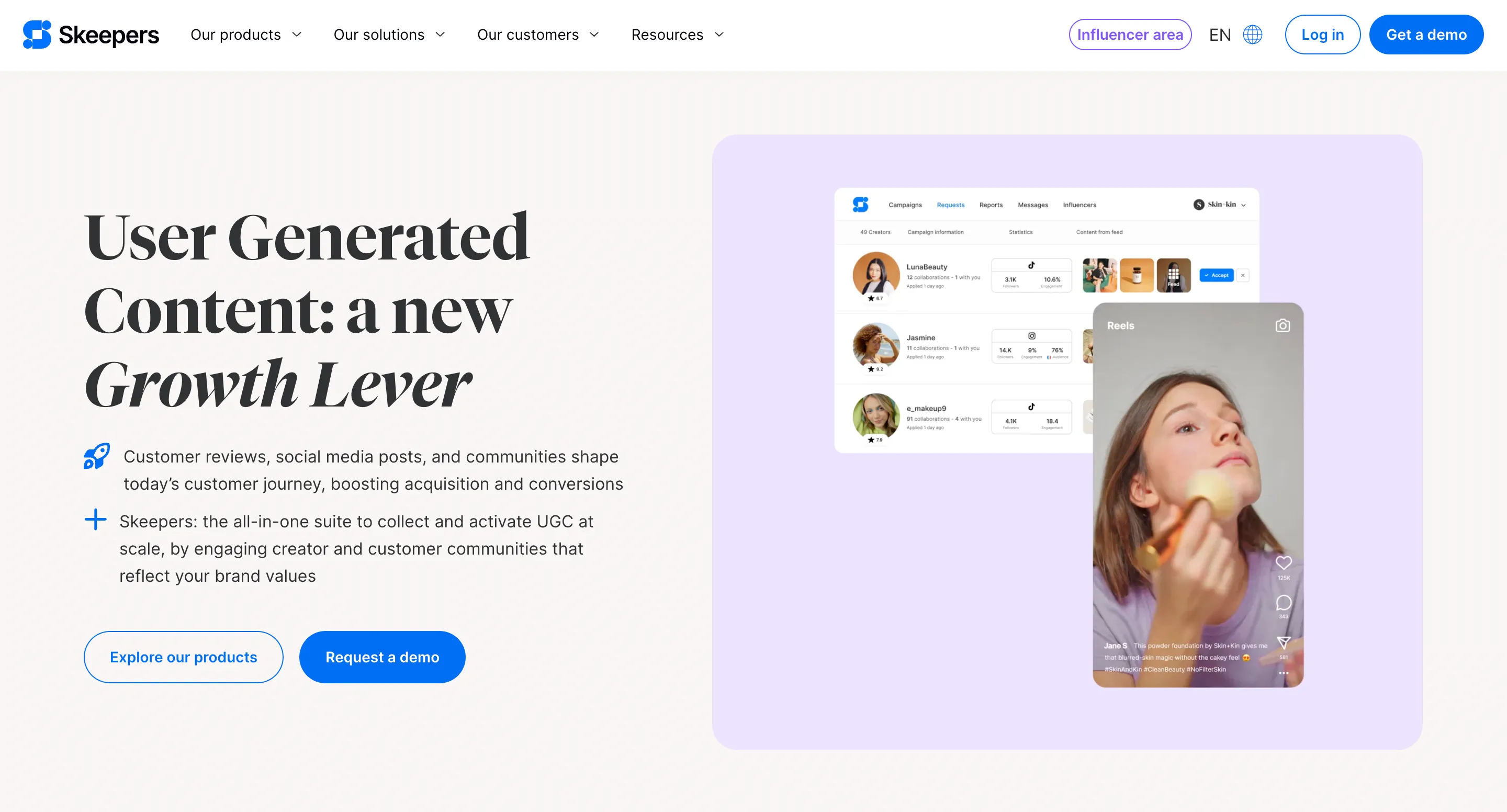
Overview: Skeepers is a cloud-based influencer management platform that uses AI-driven smart matching to connect brands with creators based on campaign criteria, alongside broader UGC and consumer engagement tools.
Best for: Brands, particularly in Europe and increasingly the US, that want influencer marketing bundled with UGC and consumer review tools.
Key features: AI-powered creator matching, detailed creator profiles with demographic and engagement data, and integration with Skeepers' broader UGC and ratings-and-reviews product suite.
Pricing: Custom, quote-based.
Why choose it: For a brand already using or considering Skeepers' UGC and review tools, adding influencer marketing from the same vendor can simplify the stack.
Comparison Table: Top Influencer Marketing Platforms for USA Brands
| Platform | Best For | AI | Creator Discovery | CRM | Campaign Management | ROI Tracking | Pricing |
|---|---|---|---|---|---|---|---|
| MyWall | Growing US ecommerce & DTC brands | Yes (Genie + AI Executive) | 150M+ network, 30+ filters | Yes | Barter, paid, affiliate | Real-time, per creator | Custom |
| Upfluence | Customer-to-creator ecommerce brands | Yes | Database + Live Capture | Yes | Yes | Yes | ~$478–$3,000+/mo |
| CreatorIQ | Global enterprise programs | Yes | 20M+ profiles | Yes | Yes, enterprise-grade | Yes, with EMV | ~$30,000+/yr |
| GRIN | Established ecommerce brands at scale | Limited | Large database | Yes | Yes | Yes | ~$25,000+/yr |
| Modash | Budget-conscious Shopify brands | Yes | 350M+ database | Light | Basic | Yes | ~$199–$499/mo |
| Later Influence | Social + influencer combined workflow | Yes | 10M+ database | Yes | Yes | Yes, with EMV | Custom |
| Influencity | Agencies needing deep analytics | Limited | 200M+ database | Light | Basic | Yes | ~$198–$398/mo |
| Collabstr | Quick UGC and influencer bookings | No | Marketplace search | Light | Basic | Light | Free–$399/mo + fees |
| Afluencer | Micro/nano influencer campaigns | No | Marketplace (creators apply) | Light | Basic | Light | Free–$49+/mo |
| Skeepers | Influencer + UGC bundled | Yes | Database with smart matching | Yes | Yes | Yes | Custom |
Manual Influencer Marketing vs AI-Powered Influencer Marketing Platforms
The difference between running influencer marketing manually and running it on an AI-powered platform shows up at every stage of the workflow:
| Manual Process | AI-Powered Platform |
|---|---|
| Spreadsheets to track creators | Centralized dashboard |
| Personal inbox for outreach | Automated, personalized outreach |
| Manually compiled monthly reports | Live, real-time analytics |
| Scrolling profiles to find creators | AI-driven creator discovery and ranking |
| Multiple disconnected tools | One unified platform |
| Manual follow-up and chasing replies | AI-driven automated follow-up |
The gap tends to widen as a brand scales. A handful of campaigns a year can survive on spreadsheets. A brand running always-on affiliate programs, seasonal pushes, and multiple product lines at once generally cannot, which is why AI-powered platforms have become the default rather than the exception for serious creator programs.
How to Choose the Best Influencer Marketing Platform
A few factors tend to matter most when narrowing the list:
- Budget. Entry points range from under $100 a month on marketplace-style tools to $30,000+ a year on enterprise platforms. Match the tier to what your program can realistically justify.
- Business size and campaign volume. A brand running one or two campaigns a quarter has very different needs than one running always-on affiliate programs across multiple product lines.
- Creator database depth. A large database with weak filters is less useful than a smaller one with precise niche, engagement, and audience-quality filters.
- AI capabilities. Look specifically at whether AI reduces real manual work, discovery, outreach drafting, and reporting, rather than just being a marketing term on the pricing page.
- Automation and integrations. Confirm the platform connects to your ecommerce stack (Shopify, WooCommerce, BigCommerce, Magento, Amazon Seller Central) and analytics tools (GA4, Meta Ads).
- CRM and reporting depth. Check whether the platform actually retains creator relationship history and reports ROI in real time, not just at the end of a campaign.
- Ease of use and scalability. A platform that's simple now but can't support more campaigns, more team members, or more complex workflows later will need replacing sooner than expected.
Which Platform Is Right for Your Business?
- Startups and early-stage brands: Afluencer or Collabstr offer low-commitment ways to run first campaigns without a long-term contract.
- Shopify brands: MyWall, Modash, and Upfluence all offer strong ecommerce integrations and discovery built around Shopify workflows.
- Amazon sellers: Platforms with strong affiliate and coupon-code tracking, such as MyWall, Upfluence, or GRIN, make it easier to tie creator content to Amazon sales.
- Enterprise brands: CreatorIQ remains the standard for large, compliance-heavy global programs.
- Agencies: Influencity and CreatorIQ both offer multi-client workflows suited to agency use.
- Consumer, fashion, and beauty brands: GRIN and MyWall both lean into ecommerce-specific workflows that fit product-led brands well.
- DTC brands scaling fast: MyWall's combination of AI automation, barter/paid/affiliate flexibility, and real-time ROI reporting suits brands trying to scale a creator program without scaling headcount at the same rate.
Conclusion
AI has fundamentally changed what it takes to run a competitive influencer marketing program in the US. What used to require a large team manually searching profiles, writing outreach, and stitching together reports can now be handled by AI-driven discovery, automated outreach, and real-time analytics, freeing marketing teams to focus on strategy and creator relationships instead of repetitive manual work.
The ten platforms above cover very different parts of the market, from marketplace-style tools built for quick creator bookings to enterprise systems built for global compliance-heavy programs. The right choice comes down to your business size, campaign volume, and how much of the workflow you actually want automated versus handled manually.
For US brands that want the fullest AI-powered workflow, creator discovery, automated outreach, flexible campaign types, an influencer CRM, and real-time ROI tracking, in one platform without enterprise-level pricing, MyWall is well worth exploring as your next influencer marketing platform.